
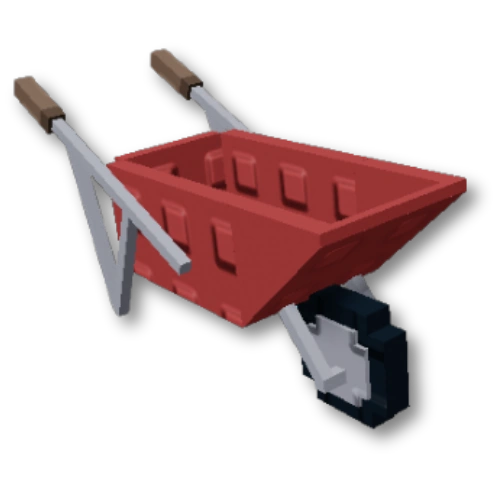
Community gear information reports 500,000 Sheckles and greater crop carrying capacity. Confirm the current item card and a small load before relying on that behavior.
Gear
Wheelbarrow
First move
Count garden-to-sell trips on the current harvest and check the live Wheelbarrow capacity before allocating the reported 500,000 Sheckles.
- Price
- 500,000 Sheckles reported
- Effect
- Greater crop carrying capacity (reported)
- Decision
- Count sell trips before and after
Wheelbarrow route
Measure carry trips before paying for capacity
The reported 500,000-Sheckles price can displace a high-value seed when one ordinary trip already carries the crop load.
Follow the route
Count how many garden-to-sale trips the current harvest requires without a Wheelbarrow.
Compare the listed 500,000-Sheckles price with the next high-value seed and verify the item's live carrying behavior.
Move one comparable harvest with it and keep the purchase only when a real capacity bottleneck disappears.
A comparable harvest requires fewer trips with Wheelbarrow, with the next seed still funded; otherwise keep the ordinary carry route.
Trips / load / seed reserve
Buy capacity only after measuring the load
A large harvest makes Wheelbarrow plausible; a single-trip harvest does not.
Count full garden-to-sell journeys for one current crop batch.
Check the live item behavior on a small batch and count the actual journeys saved.
Keep the next high-value seed and protection reserve outside the transport purchase.
Skip Wheelbarrow if the harvest already fits one trip or the buy consumes the next seed budget.
Use the normal carry route, shorten travel separately, or wait for a larger repeat harvest before revisiting capacity.
Worked decision
Three trips become one, but sale value stays the same
Hypothetical harvest: a player currently makes three garden-to-sell trips with the same crop batch.
Decision
If a live Wheelbarrow test carries that batch in one trip, record two trips saved; then ask whether this repeats often enough to justify 500,000 Sheckles without losing the next seed.
Why this route
Carrying efficiency is a travel gain. It does not add Sheckles to the fruit's quoted sale by itself.
If the state changes
If the item still needs multiple trips or handles crops differently, reset the benefit to what was observed and compare Teleporter or the ordinary carry path.
Route picker
What are you trying to do with Wheelbarrow?
Choose one decision and follow the three checks in order.
- 1 · LocateCount how many garden-to-sale trips the current harvest requires without a Wheelbarrow.
- 2 · CommitCompare the listed 500,000-Sheckles price with the next high-value seed and verify the item's live carrying behavior.
- 3 · ProveMove one comparable harvest with it and keep the purchase only when a real capacity bottleneck disappears.
If the Wheelbarrow check does not match
Count garden-to-sell trips on the current harvest and check the live Wheelbarrow capacity before allocating the reported 500,000 Sheckles.
If the item, offer, or result differs, stop before another purchase or sale. Repeat the relevant check above with the current details, then use the linked route that still fits your budget and task.
Page-specific questions
Before you commit
Does Wheelbarrow increase the sell value of crops?
Its reported use is carrying more at once, not a crop-value multiplier. The sell quote still depends on the crop and its visible state.
When is 500,000 Sheckles hard to justify?
When the current harvest fits one ordinary carry trip, or when the purchase removes the next high-value seed budget. Wait for a repeated capacity bottleneck.
What if the live carrying behavior differs?
Test a small replaceable load. If the item does not reduce trips or has another use in this server, keep the old transport route and do not budget around the reported effect.
Decision Snapshot
Wheelbarrow Next Move
A before/after carry ledger: count sell trips for a comparable harvest, verify the actual loaded capacity, and treat saved trips—not increased sale value—as the benefit.
Best use Test whether Wheelbarrow reduces the number of crop loads carried to the Sell Stand in a high-volume harvest.
Risk type Capacity stop
Safe move Count garden-to-sell trips on the current harvest and check the live Wheelbarrow capacity before allocating the reported 500,000 Sheckles.
If / Then Route
What To Do With Wheelbarrow
If Check Then Risk
My harvest exceeds normal carrying Count full garden-to-sell journeys for one current crop batch. Count how many garden-to-sale trips the current harvest requires without a Wheelbarrow. The reported 500,000-Sheckles price can displace a high-value seed when one ordinary trip already carries the crop load.
At the price or timing gate Loaded trips Compare the listed 500,000-Sheckles price with the next high-value seed and verify the item's live carrying behavior. Skip Wheelbarrow if the harvest already fits one trip or the buy consumes the next seed budget.
Confirm the result Keep the next high-value seed and protection reserve outside the transport purchase. Move one comparable harvest with it and keep the purchase only when a real capacity bottleneck disappears. If the item still needs multiple trips or handles crops differently, reset the benefit to what was observed and compare Teleporter or the ordinary carry path.
One normal trip is enough Community gear information reports 500,000 Sheckles and greater crop carrying capacity. Confirm the current item card and a small load before relying on that behavior. If the item still needs multiple trips or handles crops differently, reset the benefit to what was observed and compare Teleporter or the ordinary carry path. Use the normal carry route, shorten travel separately, or wait for a larger repeat harvest before revisiting capacity.
Risk Check
Capacity stop
The reported 500,000-Sheckles price can displace a high-value seed when one ordinary trip already carries the crop load. Skip Wheelbarrow if the harvest already fits one trip or the buy consumes the next seed budget.
Route Checks
Wheelbarrow Planning Modules
Route to try Measure carry trips before paying for capacity
Count how many garden-to-sale trips the current harvest requires without a Wheelbarrow.
Proof to collect Opportunity costA comparable harvest requires fewer trips with Wheelbarrow, with the next seed still funded; otherwise keep the ordinary carry route.
Mistake to avoid Capacity stopSkip Wheelbarrow if the harvest already fits one trip or the buy consumes the next seed budget.
When it changes Transport fallbackIf the item still needs multiple trips or handles crops differently, reset the benefit to what was observed and compare Teleporter or the ordinary carry path.
Session Checklist
Check Before You Commit
- Count how many garden-to-sale trips the current harvest requires without a Wheelbarrow.
- Compare the listed 500,000-Sheckles price with the next high-value seed and verify the item's live carrying behavior.
- Move one comparable harvest with it and keep the purchase only when a real capacity bottleneck disappears.
- Count garden-to-sell trips on the current harvest and check the live Wheelbarrow capacity before allocating the reported 500,000 Sheckles.
- If the item still needs multiple trips or handles crops differently, reset the benefit to what was observed and compare Teleporter or the ordinary carry path.
Planning Facts
- Price
- 500,000 Sheckles reported
- Effect
- Greater crop carrying capacity (reported)
- Decision
- Count sell trips before and after
- Status
- Confirm current carrying behavior